Blog of the Bilingual Program of CPEB Las Arenas (Cabrales, Asturias)
Showing posts with label Holidays and festivals. Show all posts

Saturday, 17 March 2012

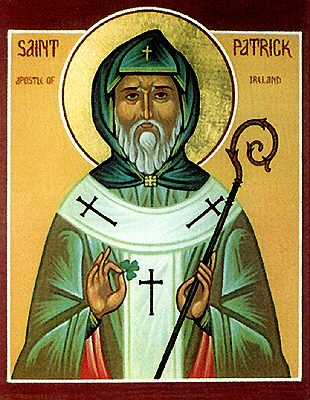
Saint Patrick's Day

St. Patrick is the patron saint of Ireland. He was born in Wales about AD 385. When he was 16 years old, he was captured from Wales by Irish raiders and taken as a slave to Ireland. He lived in Ireland for six years, but eventually he was able to escape and return to his family. Later he returned to Ireland as a missionary and converted the country to Christianity. He used the shamrock to explain the Holy Trinity. That is why the shamrock is now the symbol of Ireland.
Shamrock
Although there were many groups against him and in sipte of being arrested several times, he travelled through Ireland for thirty years, where he built monasteries, and set up schools and churches. Saint Patrick died on March 17th, 461. Saint Patrick’s Day is celebrated every 17th March. It is a public holiday in the Republic of Ireland and in Northern Ireland. It is also celebrated by Irish people in Britain and the United States. The 251st Saint Patrick’s Day Parade will take place in New York today. It is Saturday and the weather is fine in New York, so lots of people are expected to participate. 

Thursday, 1 March 2012

Dydd Gŵyl Dewi Hapus!


Don't worry if you don't understand the title of this post; it's in Welsh! Dydd Gŵyl Dewi Hapus! in English means Happy St. David's Day, which is today (1st March). It is the day when Welsh people celebrate the patron saint of Wales, St. David.

He lived in the sixth century, and was one of many early saints who helped to spread Christianity among the pagan Celtic tribes of western Britain (FAO 2º bilingual programme students: a bit like St. Columba in Scotland!).

Nowadays, St. David's Day is a special day in Wales. School children celebrate with parades, church services and Welsh songs and poetry. Many people pin a daffodil or a leek to their clothes, as these are symbols of Wales. It is also common to eat a bowl of cawl (leek broth), which is a traditional St. David's Day meal.

Happy St. David's Day! 


No te preocupes si no entiendes el título de esta entrada: ¡está en galés! Dydd Gŵyl Dewi Hapus! significa Feliz Día de San David, que se celebra hoy (1 de marzo). En este día los galeses celebran su santo patrón, San David.

Vivió en el siglo VI y fue uno de los santos que ayudaron a extender el cristianismo entre las tribus celtas paganas del oeste de Gran Bretaña.

Hoy en día, San David es un día especial en Gales. Los estudiantes lo celebran con desfiles, servicios religiosos y canciones y poemas galeses. Mucha gente luce un narciso o un puerro en la ropa, ya que estos son los símbolos de Gales. También es habitual comer un cuenco de cawl (caldo de puerros), que es la comida típica de este día.

¡Feliz Día de San David!


Daffodil
Leeks
Leek broth

Monday, 13 February 2012

Robert Burns

We have been talking in class about the Scottish poet Robert Burns. We learned about his life, first as a poor farmer and then as a famous poet, and how people in Scotland and around the world celebrate his birthday on the 25th January every year. We also translated one of his most famous poems, which is called 'My Love is Like a Red, Red Rose'. You can see the slide show and the poem below.


Hemos hablado en clase del poeta escocés Robert Burns. Aprendimos sobre su vida, primero como pobre agricultor y luego como poeta famoso, y sobre cómo la gente de Escocia y de todo el mundo conmemora su nacimiento el 25 de enero de cada año. También tradujimos uno de sus poemas más famosos, titulado 'My Love is Like a Red, Red Rose'. Abajo puedes ver la presentación y el poema.

My Love is Like a Red, Red Rose

Burns Original
Standard English Translation
1.
O, my luve's like a red, red rose,
That's newly sprung in June.
O, my luve's like the melodie,
That's sweetly play'd in tune.
2.
As fair art thou, my bonnie lass,
So deep in luve am I,
And I will luve thee still, my Dear,
Till a' the seas gang dry.
3.
Till a' the seas gang dry, my Dear,
And the rocks melt wi' the sun!
O I will luve thee still, my Dear,
While the sands o' life shall run.
4.
And fare thee weel, my only Luve,
And fare thee weel a while!
And I will come again, my Luve,
Tho' it were ten thousand mile!

O, my love is like a red, red rose,
That is newly sprung in June.
O, my love is like the melody,
That is sweetly played in tune.

As fair are you, my lovely lass,
So deep in love am I,
And I will love you still, my Dear,
Till all the seas go dry.

Till all the seas go dry, my Dear,
And the rocks melt with the sun!
O I will love you still, my Dear,
While the sands of life shall run.

And fare you well, my only Love,
And fare you well a while!
And I will come again, my Love,
Although it were ten thousand miles!

Wednesday, 25 January 2012

Happy Burns Night!

The 25th January is an important date for Scottish people. It is called Burns Night, and it is a celebration in honour of Robert Burns, who is Scotland's most famous poet. People in Scotland and around the world have a special meal on this day to celebrate his birthday, as he was born on the 25th January 1759 in Alloway, in the south-west of Scotland.

On Burns Night, people traditionally celebrate with a big meal, called a Burns Supper. Normally we eat haggis, neeps (turnips) and tatties (potatoes) at this meal. Often, the haggis is 'piped in' to the room - which means that bagpipes are played as somebody carries it to the table. Then, someone recites a poem written by Robert Burns, which is called 'To A Haggis'. After the poem, the haggis is cut and people can eat it. In the video below you can hear the poem and see some photos of haggis. There's also a list of ingredients - I hope it doesn't put you off trying it - it's really very tasty!

Friday, 16 December 2011

Christmas Songs Poll


Please vote in the poll on which is your favourite of the Christmas songs we've been listening to in class. It is in the right bar.

Merry Christmas!

Since it's almost holiday time, we've been listening to and singing Christmas pop songs in class this week! I think my favourite song is All I Want For Christmas Is You by Mariah Carey. Every time I watch the video I want to throw snowballs and make a snowman! I hope you like the songs. Below are some photos of the 1st years completing the activity in class this afternoon.

P.S. The first student to finish the wordsearch and give it to me will win a prize!

Como ya estamos casi en navidad, esta semana hemos escuchado y cantado canciones pop navideñas en clase. Creo que mi canción favorita es All I Want For Christmas is You de Mariah Carey. Cade vez que veo el vídeo me dan ganas de lanzar bolas de nieve y de hacer un muñeco de nieve. Espero que os gusten las canciones. En las fotos vemos a los alumnos de 1º de ESO haciendo la actividad en la clase de esta tarde.


Hogmanay!

We have been learning in class about how people celebrate the New Year in Scotland. Scottish people call New Year's Eve 'Hogmanay' and it is traditional for people to go first footing. This is when they go to their neighbours' houses, bringing them gifts and food and good luck for the New Year. Do you remember what people give their neighbours so that they will be warm and safe all year? (Hint: it's black and you can't eat it!).

In Edinburgh, there's always lots of things to see and do at New Year. There's a big street party on Hogmanay, the Loony Dook on New Year's Day, fireworks, singing, dancing and lots more. Below you can watch the video that I showed you in class.

History of Religion posters

This week, the 2nd years on the Bilingual Programme have been learning about how Christmas is celebrated around the world. They have designed some posters which describe Christmas traditions in four countries: Malta, Australia, New Zealand and Britain. The posters are on the wall in 'desdobles' so you can have a look for yourselves the next time you're in the classroom if the writing is too small to read in the photo below! 

Esta semana, los estudiantes de 2º que están en el Programa Bilingüe han estudiado cómo se celebra la Navidad por todo el mundo. Han hecho unos pósters que describen las tradiciones navideñas en cuatro países: Malta, Australia, Nueva Zelanda y el Reino Unido. Los pósters están colgados en el aula de "desdobles" para que los podáis ver la próxima vez que vayáis a esa clase si el tamaño de letra es demasiado pequeño para leerlo en la foto.  

Thursday, 15 December 2011

What's the best thing about Christmas?


It is only a few days until Christmas, and we are all looking forward to it. We would like to know what is the best thing about Christmas for you, so please vote!! Thet poll is on the right bar.


Christmas food
Christmas presents


Being with your family 
Christmas decorations


Wednesday, 30 November 2011

Happy St Andrew's Day!


Today you might see me walking around school wearing a Scotland flag. In case you're wondering why, it's because today is St Andrew's Day! You can read more about St Andrew, the patron saint of Scotland, in my blog post further down the page.

Tuesday, 29 November 2011

Trafalgar Square Christmas Tree


Every year on the first Thursday of December, a ceremony is held in London's Trafalgar Square to turn on the lights of the Christmas tree. The tree is very special because it is a gift to the people of London from the city of Oslo in Norway. The Norwegians have given the people of London a Christmas tree every year since 1947, to thank the city for its support of Norway during World War Two. The tree is normally over 20 metres tall and is decorated with 500 white lights.

Thousands of people come to Trafalgar Square every year to watch the Christmas tree lights being turned on and to sing Christmas carols, as this event marks the start of the Christmas season in London. But spectators must remember to wrap up warm, as it'll probably be freezing!

El primer jueves de diciembre de cada año se celebra una ceremonia en Trafalgar Square (Londres) en la que se enciende el árbol de navidad. El árbol es muy especial porque es un regalo de la ciudad de Oslo (Noruega) al pueblo de Londres. Desde 1947 los noruegos le regalan a Londres un árbol de navidad para agradecer el apoyo que le dieron a Noruega durante la Segunda Guerra Mundial. El árbol suele medir más de 20 metros y se decora con 500 luces blancas.

Miles de personas acuden a Trafalgar Square todos los años para ver cómo se encienden las luces y cantar villancicos, ya que este evento marca el inicio de la época navideña en Londres. ¡Pero los espectadores deben acordarse de abrigarse muy bien, porque probablemente helará!

Street view of Trafalgar Square, London


Monday, 28 November 2011

St Andrew's Day


This Wednesday (30th November) is St Andrew's Day. This day is important for Scottish people because Andrew is the patron saint of Scotland. The legend is that Andrew appeared in a king's vision the day before a very important battle. On the day of the battle, an X-shaped cross appeared in the sky above the battlefield, which the Picts (people from the north east of Scotland) won. For this reason, the Saltire (St Andrew's Cross) became the national emblem and flag of Scotland, as it looks like the white cross against a blue sky.

St Andrew's Day is not a national holiday in Scotland, although a lot of people think it should be. I will be wearing something Scottish on Wednesday for St Andrew's Day! :-) More people have parties for Burn's Night, when we celebrate Scotland's most famous poet, Rabbie Burns. But I will be telling you more about that in January...!

Este miércoles 30 de noviembre es el Día de San Andrés. Ez un día importante para los escoceses porque San Andrés es su patrón. Cuenta la leyenda que san Andrés se le apareció en una visión al rey en la víspera de una batalla muy importante. El día de la batalla, apareció en el cielo sobre el campo de batalla una cruz en forma de X. La batalla fue ganada por los pictos (el pueblo del nordeste de Escocia). Por este motivo la Cruz de san Andrés se convirtió en el emblema de Escocia y en su bandera nacional, ya que tiene el aspecto de una cruz blanca sobre el cielo azul.

El Día de San Andrés no es festivo en Escocia, aunque mucha gente piensa que debería serlo.El miércoles, me pondré algo escocés para celebrar San Andrés. La gente celebra más fiestas para Burn's Night, cuando se recuerda al poeta escocés más famoso, Rabbie Burns. ¡Pero ya os contaré más cosas de él en enero!